




rewrite this content using a minimum of 1200 words and keep HTML tags
The crypto market moves fast, and momentum trading is how many traders keep pace. The idea is simple: trade with the trend. Buy assets that have been rising, sell those that are falling, and expect recent strength or weakness to continue—at least for a while.
This guide covers how momentum trading in crypto works, which indicators matter, and the real costs and risks you need to manage.
Table of Contents
1What Is Momentum Trading in Crypto?Why Crypto Is a Unique Environment for Momentum Trading24/7 Markets and Why Momentum Never Really SleepsHigher Volatility: More Opportunity, More False MovesThe Role of Sentiment, News, Listings, and Social HypeHow Momentum Trading Works, Step by StepStep 1: Find a Coin That’s Already MovingStep 2: Check Whether the Move Has StrengthStep 3: Confirm the Setup with Trend, Volume, and ContextStep 4: Plan the Trade Before EnteringStep 5: Manage the Position After EntryStep 6: Exit Without Letting Emotion Take OverThe Core Building Blocks of a Crypto Momentum SetupPrice Trend: The Foundation of MomentumBreakouts: When Price Pushes Through a Key LevelVolume: Why a Move Is Stronger When Participation RisesVolatility: When Fast Markets Help and When They HurtTimeframes: How a 15-Minute Setup Differs from a Daily-Chart SetupThe Main Types of Momentum TradingCross-Sectional Momentum: Comparing Winners and LosersTime-Series Momentum: Following an Asset’s Own TrendAbsolute Momentum: Using Positive or Negative Past PerformanceTrend Following and How It Overlaps with MomentumThe Most Important Momentum IndicatorsMoving Averages: Spotting the Broader TrendMoving Average Crossovers: A Simple Trend-Shift SignalRSI: Measuring Momentum StrengthMACD: Identifying Momentum Shifts and CrossoversATR: Measuring Volatility for Stops and Trade PlanningHow to Read Momentum Without Overcomplicating ItThe Hidden Costs of Momentum Trading in CryptoRisk Management: The Part That Matters MostPosition Sizing: Deciding How Much to RiskStop-Losses: Defining Where the Trade Is WrongVolatility Stops and ATR-Based Risk ControlProfit-Taking: Fixed Targets vs. Trailing ExitsCommon Momentum Trading Mistakes in CryptoA Practical Momentum Trading WorkflowStep 1: Identify the Market TrendStep 2: Choose the Signal FrameworkStep 3: Confirm with Volume and VolatilityStep 4: Define Entry, Stop, and Target in AdvanceStep 5: Monitor, Rebalance, or ExitStep 6: Review the Trade OutcomeWhen Momentum Trading Can Go WrongSpot vs. Perpetual Futures: Same Idea, Different Risk ProfileWho Momentum Trading Is Best ForFinal ThoughtsFAQIs momentum trading the same as day trading?Can beginners use RSI alone?Is momentum trading safer on BTC than on small altcoins?Do I need leverage to momentum trade crypto?How much money do I need to start learning?Is momentum trading better in bull markets?How long do momentum trades usually last?Can momentum trading be automated?
What Is Momentum Trading in Crypto?
Momentum trading is built on one core idea: recent price movements tend to continue. Momentum traders buy coins that are gaining strength and aim to sell higher, or short assets in decline, expecting prices to keep falling. It’s reactive and rule-driven—following existing momentum rather than predicting reversals.
This type of trading differs from momentum investing, which rides trends over weeks or months in stocks or broad asset classes. Momentum investors move slower, hold longer, and tolerate more volatility as they build positions. Momentum trading in the crypto market is faster, more structured, and demands tighter discipline. Strong trends can pay well, but without rules, reversals hit hard.
Why Crypto Is a Unique Environment for Momentum Trading
Crypto isn’t just a faster version of traditional financial markets. It operates under a different set of rules entirely, with structural features that create both bigger opportunities and greater risks for momentum-based strategies. Here’s what sets it apart:
24/7 Markets and Why Momentum Never Really Sleeps
Unlike traditional financial markets with fixed sessions, crypto runs continuously. Market trends can gain or break at any hour, driven by activity in Asia while US traders are offline. There’s no closing bell to reset sentiment overnight. Missing a key move can mean skipping a great setup or getting trapped in a false trend. Constant monitoring or automation becomes essential.
Higher Volatility: More Opportunity, More False Moves
Higher volatility defines crypto. Large price swings—driven by algorithmic trading, large players, and low-liquidity tokens—create conditions where momentum strategies can generate fast gains from breakouts or sudden runs. But speed cuts both ways. Pullbacks are abrupt, false breakouts are common, and price volatility demands tighter risk controls.
The Role of Sentiment, News, Listings, and Social Hype
No market sentiment moves faster than crypto’s. A single listing, headline, or viral post can trigger vertical price changes. Investor sentiment shapes when momentum accelerates and when it decays. Sentiment analysis tools complement price action, but don’t replace it. Real momentum is confirmed by actual price movement, not just online buzz.
How Momentum Trading Works, Step by Step
Step 1: Find a Coin That’s Already Moving
Start with digital assets that are already gaining traction. Look for consistent higher highs and higher lows in uptrends, or the reverse in downtrends. Range expansion breaking out of consolidation is another signal. Good momentum trading starts with strong movement, not hope.
Step 2: Check Whether the Move Has Strength
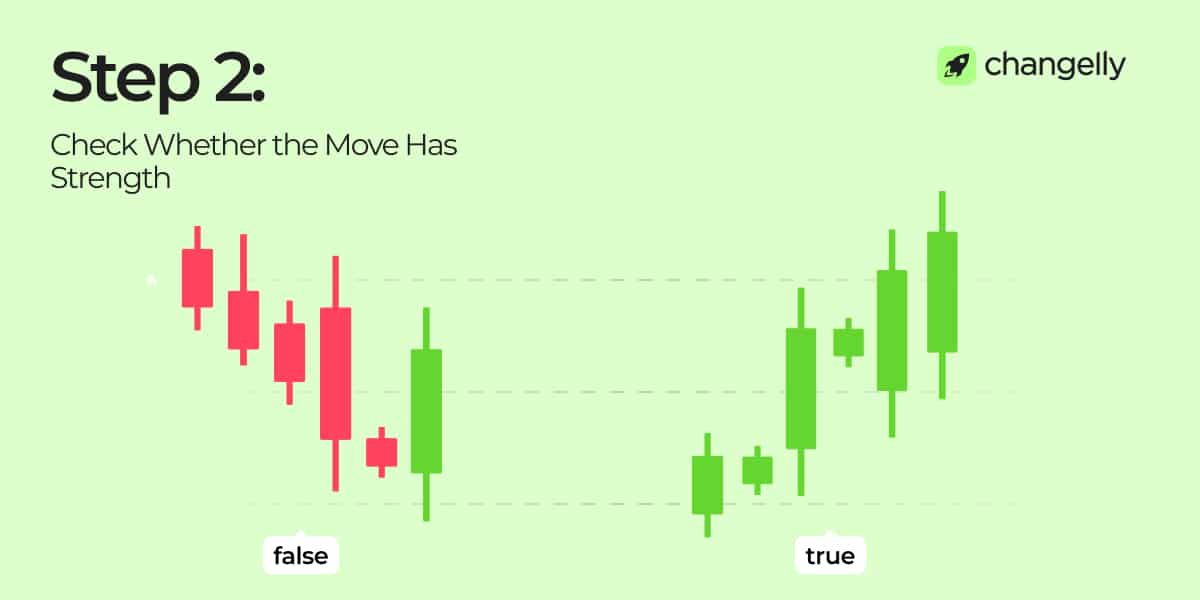
Once an asset moves, gauge whether the momentum is more than a spike. Look for trend strength: a clear push that holds, not just a single green candle. Technical indicators translate price data into objective readings. Strength is confirmed when price holds levels, resists fading, and maintains direction.
Learn more: What Is Crypto Technical Analysis?
Step 3: Confirm the Setup with Trend, Volume, and Context
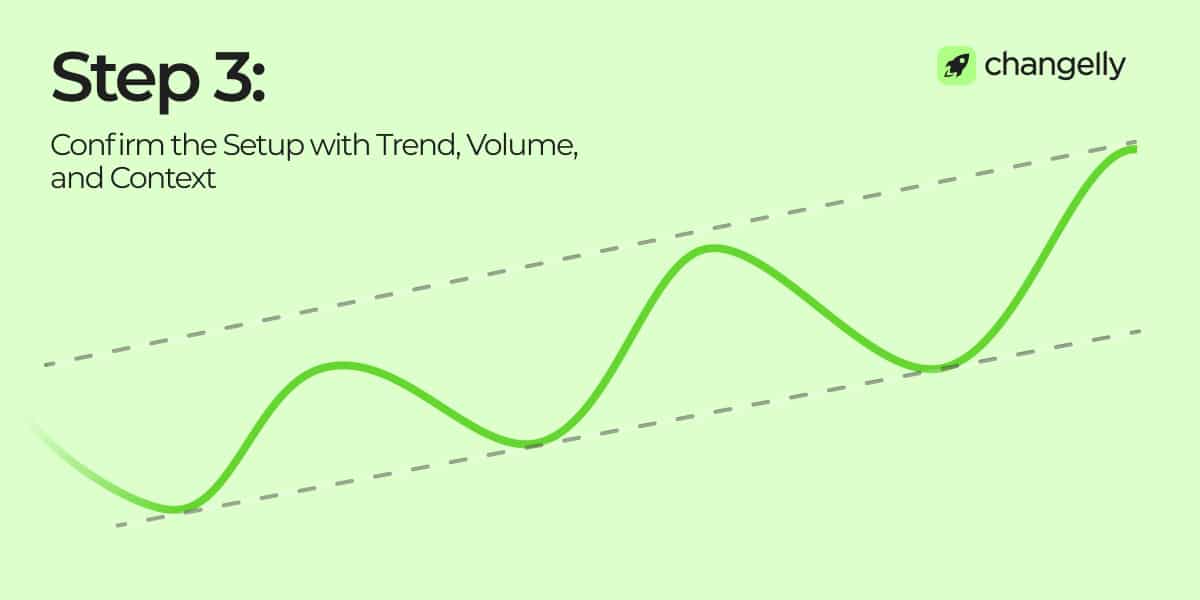
No single indicator provides enough certainty. Combine price structure with trading volume: high volume behind a move signals real participation and increases the odds of continuation. Weak volume suggests the trend may not last. Market conditions matter too: Bitcoin dominance shifts, macro events, and trending narratives all affect momentum setups.
Step 4: Plan the Trade Before Entering
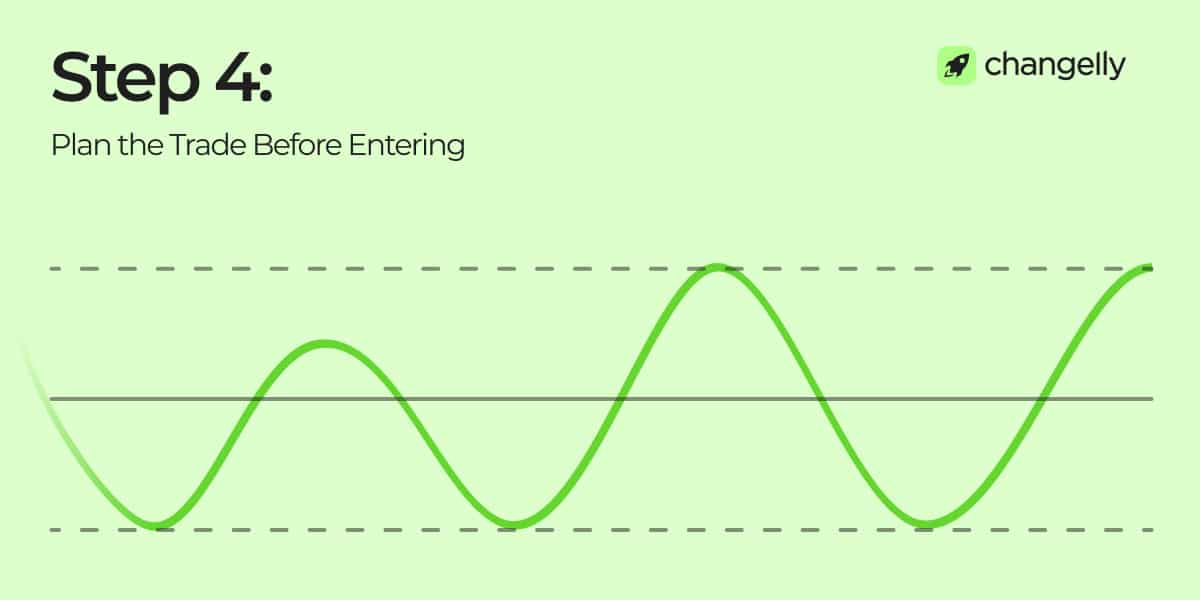
Every momentum trade needs predefined rules: entry trigger, invalidation level, and profit target. Set these before entering. Position sizing controls emotion and enforces discipline. Trading decisions should happen before market excitement, not because of it.
Step 5: Manage the Position After Entry
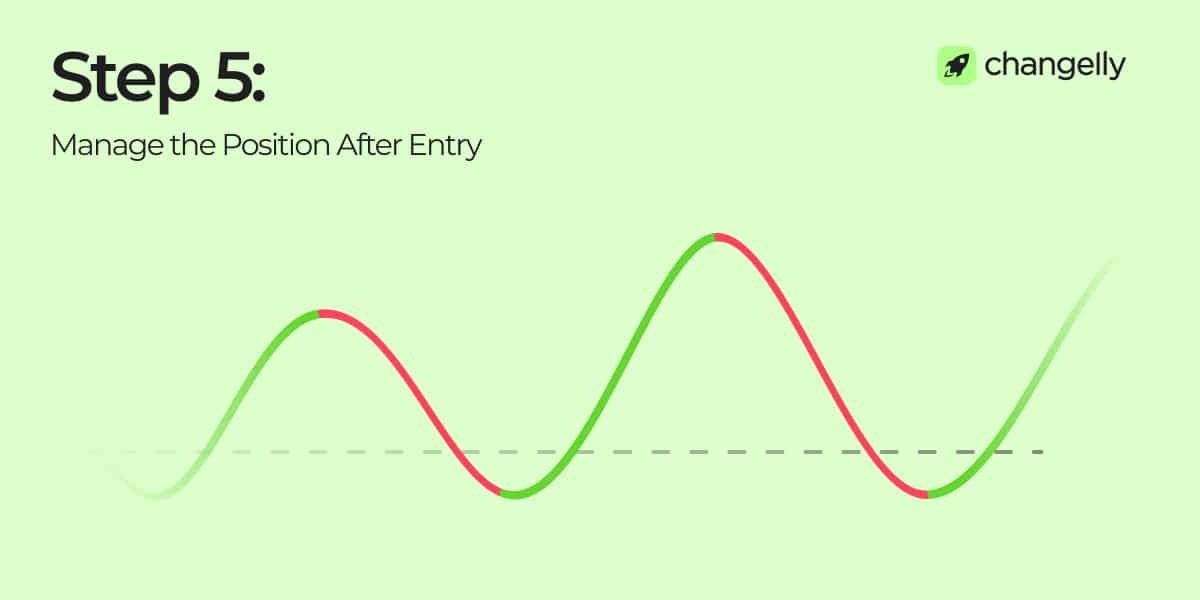
Constant monitoring matters after entry. Adjust stops near meaningful support levels or resistance using past price action. Move stops up as price rises. Take partial profits along the way. Respond to the market, not to impulses.
Step 6: Exit Without Letting Emotion Take Over

Exit discipline is as important as entry. Watch for momentum stalling—weakening thrust, key breakdowns, or heavy selling pressure. Exit triggers should be predefined and followed even when a trade “looks like it could run further.” Exiting protects gains, while chasing perfection destroys them.
The Core Building Blocks of a Crypto Momentum Setup
Price Trend: The Foundation of Momentum
Momentum relies on identifying price trends—direction and persistence. Higher highs and higher lows signal an uptrend. The reverse signals a downtrend. Confirm momentum before acting. If price keeps breaking key levels in one direction, that’s the foundation of the setup.
Breakouts: When Price Pushes Through a Key Level
A breakout signals a shift from consolidation to movement. After price breaks a barrier, watch for conviction—small retests or strong acceleration suggest follow-through. When momentum and strong structure align, breakouts offer powerful entry signals.
Read more: Best Indicators for Crypto Breakouts
Volume: Why a Move Is Stronger When Participation Rises
Volume shows how many participants are backing a move. High trading volume increases the odds a trend is real, not noise. When both price and volume rise together, momentum signals become more reliable. Low volume means less reliability.
Volatility: When Fast Markets Help and When They Hurt
High price volatility expands ranges and creates momentum opportunities, but fast moves also cause setups to fail quickly, increase slippage, and trigger stops prematurely. Adjust your approach to market conditions. Volatility is data, not always an advantage.
Timeframes: How a 15-Minute Setup Differs from a Daily-Chart Setup
Your timeframe choice shapes everything about a momentum trade—how often you act, how wide your stops are, and how much noise you have to filter. Here’s how the two most common approaches compare:
The Main Types of Momentum Trading
Cross-Sectional Momentum: Comparing Winners and Losers
Cross-sectional momentum ranks assets by relative performance over a set period. Top performers go long, while underperformers go short. Traders use this with coin baskets or watchlists, focusing on relative strength to identify outperformers.
Time-Series Momentum: Following an Asset’s Own Trend
Time-series momentum uses an asset’s own price history. If a recent trend predicts the next period’s movement, it generates a signal. This approach—close to trend following—assumes momentum continues based on the asset’s own behavior, not external comparisons.
Absolute Momentum: Using Positive or Negative Past Performance
Absolute momentum asks whether an asset’s return is positive or negative. Go long on positive, neutral or short on negative. This helps avoid sitting in downtrends and can protect portfolio returns during bear markets, when assets often decline together.
Trend Following and How It Overlaps with Momentum
Trend following uses stricter rules to hold positions as long as trends persist. Momentum traders seek shorter-term bursts and react more quickly to price changes. Both rely on continuation, just at different speeds and levels of confirmation.

How to Get Free Crypto
Simple tricks to build a profitable portfolio at zero cost

The Most Important Momentum Indicators
Momentum traders rely on technical indicators to read price action and identify trends—but no indicator works in isolation. Always combine signals with market context.
Learn more: Best Indicators to Use for Crypto Trading
Moving Averages: Spotting the Broader Trend
A moving average smooths price data to reveal direction. Simple MA (SMA) and exponential MA (EMA) are most common. The EMA reacts faster to recent closing prices. When price trades above a rising moving average, momentum is positive. Breaking below suggests weakness.
Moving Average Crossovers: A Simple Trend-Shift Signal
When a fast moving average crosses a slow one upward, it hints at bullishness. A downward cross suggests bearishness. Moving average crossovers can lag real moves, so confirm with price action or other signals. The moving average convergence divergence (MACD) indicator builds directly on this concept.
RSI: Measuring Momentum Strength
The relative strength index (RSI) was developed by J. Welles Wilder Jr. and measures how fast price rises or falls. Readings above 70 suggest overbought conditions. Below 30 suggests oversold. RSI is useful but shouldn’t stand alone. Combine it with price action and other confirmation. Using RSI as a standalone signal is one of the most common beginner mistakes.
MACD: Identifying Momentum Shifts and Crossovers
The MACD line tracks the distance between two moving averages and shows momentum shifts through its signal line and histogram. When the MACD line crosses above the signal line, it can indicate rising momentum. When the average convergence divergence line crosses below, momentum may be weakening. Use MACD crossovers as confirmation, not as standalone triggers.
ATR: Measuring Volatility for Stops and Trade Planning
The average true range (ATR) measures price volatility, not trend direction. It quantifies recent price swings and helps set stops and size positions. Wider stops in volatile conditions, tighter in calm ones. ATR adapts to market conditions automatically, making it practical for risk control.
How to Read Momentum Without Overcomplicating It
When reading momentum, keep it simple. Just follow this quick checklist:
Identify trend direction from price action.
Add one moving average to confirm direction.
Apply one oscillator (RSI or MACD) for confirmation.
Confirm with volume and broader market conditions.
Factor in your strategy: sizing, spread, and fees.
Check for signal contradictions before acting.
Validate with higher timeframes when needed.
Remember that no indicator can guarantee anything. Context helps more than any individual signal.
The Hidden Costs of Momentum Trading in Crypto
Chasing momentum is never free. Trading costs go well beyond exchange commissions:
Trading feesExchange commissions on every entry and exit.
Bid-ask spreadThe hidden gap between buy and sell prices in every trade.
SlippageWhen volatile market movements fill orders at worse prices than expected.
Funding ratesIn perpetual futures, periodic payments between longs and shorts that can add to or subtract from returns
Low-liquidity altcoins are especially dangerous for momentum traders. Wider spreads, thin order books, and manipulated volume all increase the chance of slippage and make momentum signals less reliable. For frequent traders, these costs accumulate fast and can erase any small edge entirely. Baking costs into your strategy upfront is not optional.
Risk Management: The Part That Matters Most
No momentum strategy survives without disciplined risk management. Crypto reversals can be abrupt, and a momentum-based strategy lives or dies by its risk rules.
Learn more: Crypto Risk Management Strategies
Position Sizing: Deciding How Much to Risk
Risk a defined percentage per trade: 1% of account balance is a common benchmark. Set your stop based on volatility and strategy. Calculate position size from the difference between entry and stop. Lower size for riskier assets or weaker setups. Consistent sizing enforces discipline regardless of market conditions.
Stop-Losses: Defining Where the Trade Is Wrong
Set stops at meaningful chart levels where your thesis fails, not just at random percentages. Give enough room for normal volatility but protect against full reversals. Stop-losses are non-negotiable if you want to stay in the game long-term.
Volatility Stops and ATR-Based Risk Control
Use ATR to determine appropriate stop distance. Multiply ATR by 1.5x or 2x for a buffer in volatile assets. This adjusts stops to match actual market conditions instead of arbitrary levels.
Profit-Taking: Fixed Targets vs. Trailing Exits
How you exit a trade matters as much as how you enter it. Neither fixed targets or trailing exits are universally better. Just match your method to the market behavior and your trading style:
Learn more: Crypto Profit-Taking Strategies
Common Momentum Trading Mistakes in Crypto
Momentum trading has a learning curve, and most early losses come from the same repeatable errors. Here’s what to avoid:
Buying after a giant green candle out of FOMO
Using RSI or MACD as standalone signals
Ignoring the broader market trend
Confusing hype with real momentum
Trading low-volume coins with fake or unreliable activity
Forgetting spreads, slippage, and fees in the calculation
Overtrading because crypto markets never close
Using leverage before understanding liquidation risk
A Practical Momentum Trading Workflow
A systematic approach removes guesswork and keeps trading decisions grounded in process, not emotion. Here’s a step-by-step breakdown of where to start:
Step 1: Identify the Market Trend
Start at the macro level. Is the broader crypto market trending up, down, or sideways? Then zoom into your timeframe. A momentum-based strategy works best when the micro and macro trend align. Trading against the broader direction adds unnecessary risk.
Step 2: Choose the Signal Framework
Define which indicators and rules you’ll use before scanning for trades. This means picking your moving average settings, your oscillator (RSI or MACD), and your entry criteria. Consistency in your framework is what makes performance metrics meaningful over time.
Step 3: Confirm with Volume and Volatility
A setup isn’t complete without volume confirmation. High trading volume behind a move increases the odds it’s real. Check ATR to understand current volatility: it affects stop placement and whether a setup is actually tradeable given your risk tolerance.
Step 4: Define Entry, Stop, and Target in Advance
Write it down before you enter. Your entry trigger, your stop-loss level, and your profit target should all be fixed before the trade opens, not after you’re already in a position.
Step 5: Monitor, Rebalance, or Exit
Track the position against your plan. Adjust stops as price moves in your favor. Take partial profits if the setup allows. Exit cleanly when price hits your target or your stop. Don’t improvise based on what the market feels like in the moment.
Step 6: Review the Trade Outcome
After every trade, record what happened and why. Did the setup work as expected? Did costs affect the result? Reviewing outcomes is how a momentum trading strategy improves over time. Without this step, you’re just repeating the same mistakes faster.
When Momentum Trading Can Go Wrong
Momentum fails when:
False breakouts trap traders on the wrong side of a move
Choppy markets whipsaw traders with no clear trend direction
Sudden reversals follow news or unexpected announcements
Manipulated volume and thin order books produce unreliable signals
Momentum crashes produce sharp, fast drawdowns
The evidence for momentum in crypto is real but not absolute. Some research finds profitable short-run momentum over 1–12 week windows in high-liquidity, large-cap coins. Other findings show weak, insignificant, or regime-dependent results, particularly in bear markets. Always backtest before committing real capital.
Spot vs. Perpetual Futures: Same Idea, Different Risk Profile
In spot trading, you hold the actual crypto asset—no leverage, no liquidation, no funding costs. It’s the simpler starting point for momentum traders.
Meanwhile, perpetual futures offer leverage and the ability to go short, but introduce liquidation risk and funding rates (periodic payments between longs and shorts that keep perp prices aligned with spot). Leverage magnifies losses as well as gains. Funding adds to or subtracts from returns and needs to be factored in alongside spreads and fees.
Read more: Crypto Derivatives: A Beginner’s Guide
Who Momentum Trading Is Best For
Momentum trading suits traders with time, discipline, and the ability to act decisively. It works best for:
Traders who can monitor markets and respond quickly
Those who prefer rule-driven systems over fundamental analysis
Users comfortable with volatility, losses, and uncertainty
Momentum rewards speed and structure. It doesn’t reward hope or guesswork.
Final Thoughts
Effective momentum trading is a defined system that matches market direction with process discipline. No strategy wins automatically, and success depends on consistent rules, cost awareness, and systematic adjustment over time.
Start small. Test setups before risking real capital. Momentum trading works, but only if the process stays sustainable and costs stay controlled.
FAQ
Is momentum trading the same as day trading?
No. Day trading is about your holding period. Momentum trading is about strategy. Momentum trades can last hours or days depending on the trend.
Can beginners use RSI alone?
No, RSI alone generates too many false signals. Always combine it with price action and volume.
Is momentum trading safer on BTC than on small altcoins?
Yes, Bitcoin has higher liquidity, tighter spreads, and less manipulation risk than smaller coins.
Do I need leverage to momentum trade crypto?
No, leverage amplifies losses as well as gains and adds liquidation risk. Start with spot trading.
How much money do I need to start learning?
None, if you use paper trading. Test your strategy first before risking real capital.
Is momentum trading better in bull markets?
Yes, trends are clearer and setups more reliable. Momentum exists in bear markets too, but requires faster reactions and tighter risk controls.
How long do momentum trades usually last?
Minutes to days—the duration follows the trend, not a fixed schedule.
Can momentum trading be automated?
Yes, algorithmic trading and backtesting can streamline execution, but always supervise your system.
Disclaimer: Please note that the contents of this article are not financial or investing advice. The information provided in this article is the author’s opinion only and should not be considered as offering trading or investing recommendations. We do not make any warranties about the completeness, reliability and accuracy of this information. The cryptocurrency market suffers from high volatility and occasional arbitrary movements. Any investor, trader, or regular crypto users should research multiple viewpoints and be familiar with all local regulations before committing to an investment.
and include conclusion section that’s entertaining to read. do not include the title. Add a hyperlink to this website http://defi-daily.com and label it “DeFi Daily News” for more trending news articles like this
Source link